NUTRITION
LIVE SPIRULINA – Better than Supplements!!
Live Spirulina is a pure living functional superfood — not a supplement — with the highest concentration of natural living & bioavailable antioxidants, anti-inflammatories, omega fatty acids, vitamins and minerals available.
Vitamins and minerals and other nutrients provided in most supplements are inorganic and often chemically synthesized, requiring the addition of stabilizers and preservatives to achieve extended shelf life.
Our bodies require a balanced nutrition by eating a wide variety of healthy living foods, but this isn’t always easy or financially possible!
Live Spirulina is packed with almost every nutrient that your body needs to thrive — already converted into organic nutrients that are quickly absorbed and assimilated. In its’ Live form is better absorbed into the body due to their soft cells that dissolve almost instantly when eaten making it more bioavailable that other supplements. A daily portion of Live Spirulina can help you achieve and maintain a complete and healthy diet — even when you can’t eat 3 healthy meals a day.
SPIRULINA FOR COMPLETE NUTRITION
What does it contain?
Live Spirulina contains almost every nutrient the human body needs to grow and thrive. It’s an easy way to get complete nutrition — without supplements. A soft cell wall that makes it fast and easy to digest — especially compared to plant-based foods.

Proteins
Provides more protein (60-70%) than beef (26%) or soy (35-50%) and includes the 8 essential amino acids that the body cannot synthesise:
— isoleucine (required for optimal growth)
— leucine (stimulator of brain functions)
— lysine (necessary for producing antibodies, enzymes and hormones)
— methionine (rich in sulphur, has antioxidant properties)
— phenylalanine (required by the thyroid gland)
— threonine (improves intestinal and digestive functions)
— tryptophan (regulates serotonin)
— valine (naturally stimulates mental and physical capacities).
Also contains other important amino acids: alanine, arginine, aspartic acid, cysteine, glutamic acid, glycine, histidine, proline, serine, and tyrosine.
Organic Vitamins
An excellent way to get all your vitamins — naturally:
— exceptionally high provitamin A (beta-carotene)
— exceptionally high vitamin B12 content (four times higher than raw liver)
— significant levels of B1, B2, B3, B5, B6, B7, B8 and B9, vitamin D, vitamin E, and vitamin K
Organic Minerals
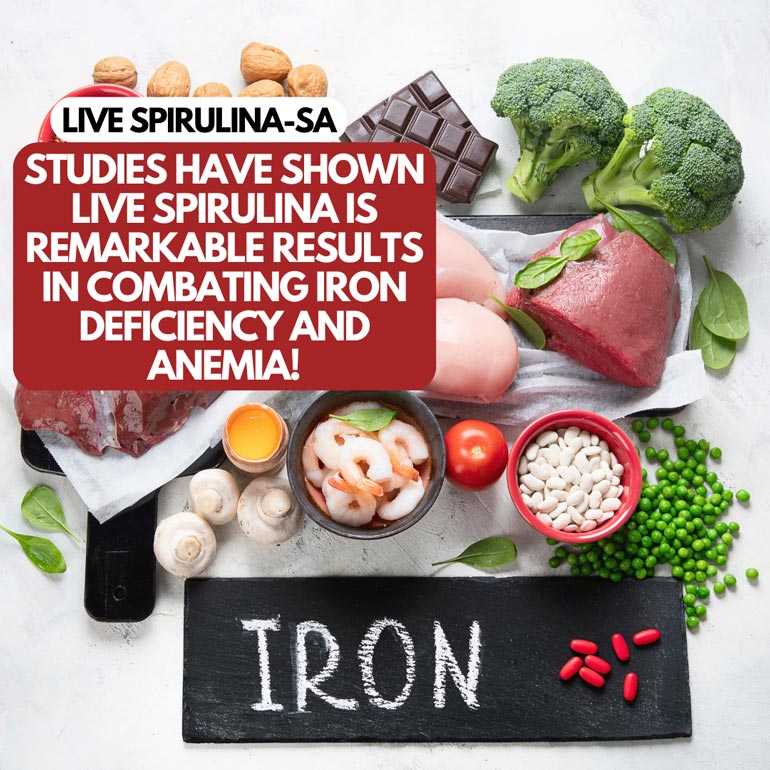
— exceptionally high iron content
— high in phosphorus
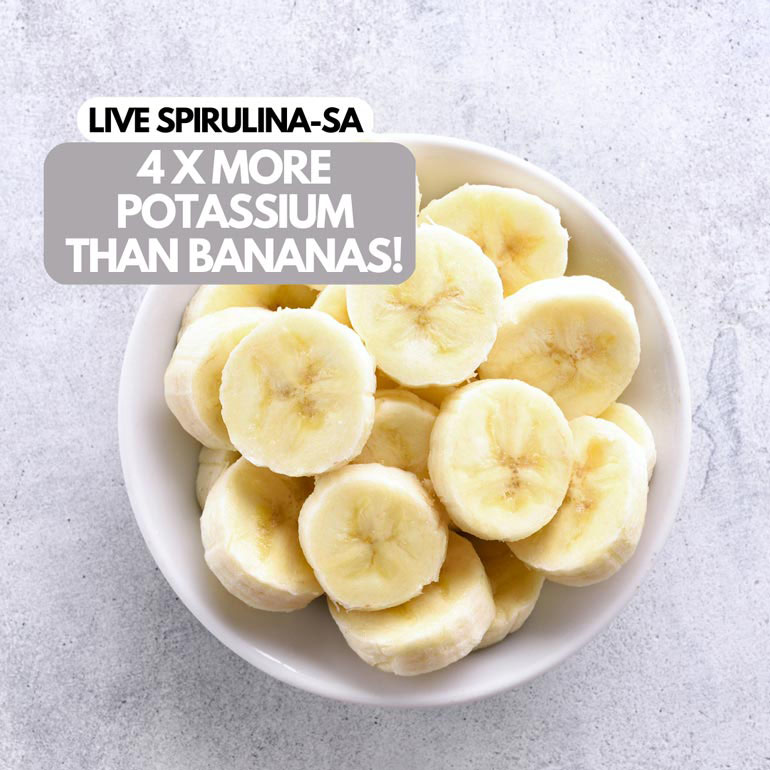
— high in potassium
— high in calcium
— high in magnesium
— high in selenium
— excellent source of zinc
Omega Fatty Acids
Many people think that fish make omega oils. That’s not true — fish get their omega’s by eating algae. Spirulina has:
— omega-6 and omega-3 fatty acids in an excellent 1.5–1.0 ratio
— the richest source of gamma linolenic acid (GLA) after breast milk
Powerful Pigments
Fifteen pigment proteins — including chlorophyll, phycocyanin and carotenoids — that science has shown to have powerful anti-inflammatory, antioxidant and anti-tumour properties.
Antioxidants and Anti-inflammatories
Spirulina contains a powerful plant-based protein called phycocyanin — research confirm it provides unique antioxidant, pain-relief, anti-inflammatory, and brain-protective properties.
Fresh vs Dried Spirulina
There is a great deal of difference between the nutritional values of fresh and traditional dried spirulina.
-
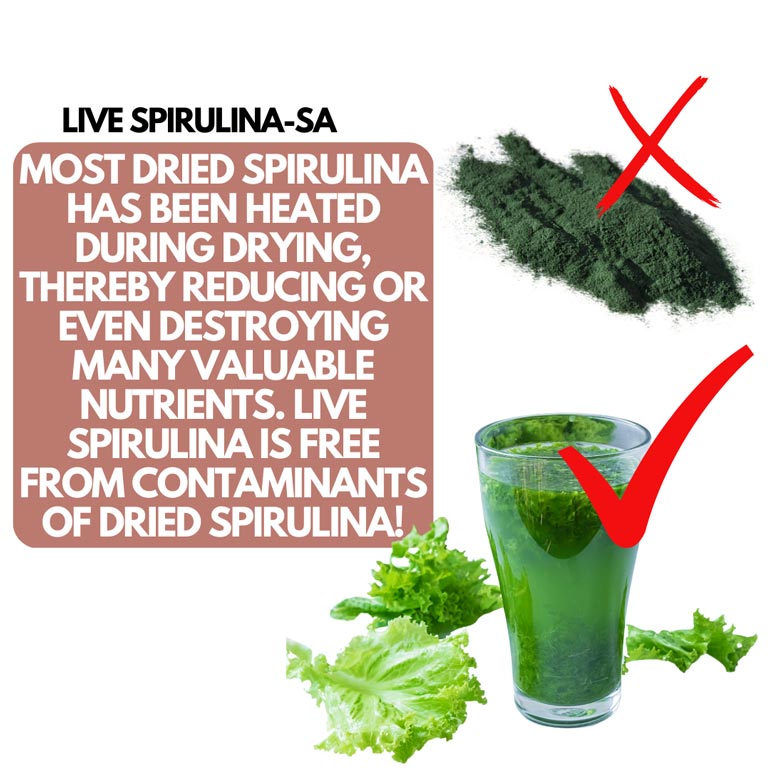
Most dried spirulina has been heated during drying, thereby reducing or even destroying many valuable nutrients
-
It is almost impossible to know in what growth medium dried spirulina was grown – if not grown in pure clean water with pure nutrients it may have absorbed unhealthy chemicals and even toxins.
-
Almost all spirulina is grown in open air ponds and may absorb unhealthy chemicals and even toxins from air pollution, smoke and ash, bird and animal waste and insect or other contamination.
-
Drying spirulina allows a five-year shelf life, but, if not cold stored, many nutrients degrade over time and omega fatty acids go rancid resulting in bad taste and odours.
-
Our team has decades of experience researching and growing spirulina. We recommend fresh or blast frozen spirulina grown under controlled conditions in bioreactors.